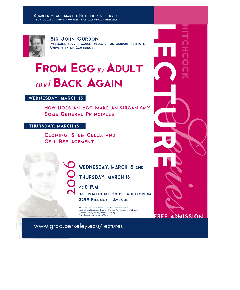
Sir John Gurdon
Wellcome Trust/Cancer Research UK Gurdon Institute, University of Cambridge
Charles M. and Martha Hitchcock Lectures
March 16, 2006 — 4:10 PMUniversity of California, Berkeley — UC Berkeley Campus
About the Lecture
Pioneering cell biologist Sir John Gurdon’s ground-breaking studies in nuclear transplantation galvanized efforts to “clone” a mammal from an adult cell-a quest that in 1996 produced a healthy sheep named “Dolly.” In this lecture he explores the potential of stem cells.
About Sir John Gurdon
Pioneering cell biologist Sir John Gurdon’s ground-breaking studies in nuclear transplantation galvanized efforts to “clone” a mammal from an adult cell–a quest that in 1996 produced a healthy sheep named “Dolly.” The intellectual driving force behind this success was Gurdon’s discovery that cells of the body are capable of differentiating into all cell types of a vertebrate animal. Gurdon provided unprecedented evidence that nuclear transplantations from specialized cells could give rise to adult, fertile genetic copies of their donor. His findings also yielded wide-ranging medical implications for the use of stem cells in tissue therapy. Gurdon recently revisited this field to study nuclear reprogramming and cell fate determination in amphibians. Gurdon is an active researcher at The Wellcome Trust/Cancer Research UK Gurdon Institute of Cancer and Developmental Biology, and served as its first chairman from 1988-2001.
In the News
- Sir John Gurdon awarded Nobel Prize in Physiology or Medicine, 2012
- Sir John Gurdon obituary