[00:00:00] MARGARET CHOWNING:
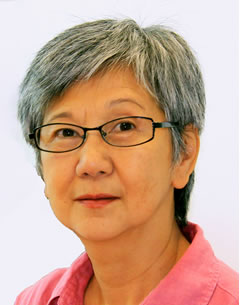
Okay, let’s get started this afternoon. Hello. I’m Margaret Chowning, chair of the Moses Lectureship Committee.
We’re pleased, along with the Graduate Division, to present Aihwa Ong, this year’s speaker in the Bernard Moses Memorial Lecture Series. As a condition of this bequest, we’re obligated to tell you how the endowment supporting the lectures came to UC Berkeley. In 1937, University of California President Robert Gordon Sproul and the UC Board of Regents established the Bernard Moses Memorial Lectureship in the Social Sciences.
The lectureship honors the memory of the late Bernard Moses, a professor of history and political science at the University of California from 1875 to 1911, and an emeritus professor from 1911 until his death in 1930. Professor Moses earned a worldwide reputation for his contributions to understanding the problems of the Latin American republics and as a pioneer scholar. Professor Moses served as a member of the United States Philippine Commission from 1900 to 1904.
Past lecturers have included Herma Hill Kay, Nicholas Riasanovsky, George Lakoff, Kenneth Stampp, uh, Carolyn Merchant, Jean Lave, Emmanuel Saez, and Mary Ann Mason. Now I’d like to say a word, a few words, about our lecturer, Aihwa Ong A foreign-born anthropologist with an interdisciplinary approach to research and scholarship, Aihwa Ong is a major contributor to current debates on emerging global culture.
While her work has focused for the last several decades on political, cultural, and technological entanglements in the Asian Pacific Rim, her most recent work has turned toward intersections of biotechnology, ethics, and governance in Southeast Asia and China. Several of Ong’s concepts, most notably flexible citizenship, graduated sovereignty, and global assemblages, have become a part of the shared lexicon of ideas used in discourses of globalization and modernity. Ong’s work has offered challenging new perspectives on neoliberalism, political sovereignty, and citizenship that are indispensable in our attempts to comprehend the dynamic complexities of the current world historical moment.
Ong has offered, n- um, authored numerous books related to her research in global modernity. Her most recent book, Neoliberalism as Exception: Mutations in Citizenship and Sovereignty, which was published in 2006, examines the economic doctrine of neoliberalism as a malleable technology of governing that can be deployed in different ways by different political regimes. In the book, Ong explores the ways that li– neoliberal strategies of governing work to reconfigure preexisting modes of citizenship by organizing people according to marketable skills rather than membership within nation-states.
Ong recently edited with Nancy Chen the volume Asian Biotech: Ethics and Communities of Fate, uh, in– published in twenty ten, a collection of essays on biotech projects and policies in China, Singapore, South Korea, and Taiwan. Other books by Ong include Buddha Is Hiding: Refugees, Citizenship, and the New America in 2003, and Flexible Citizenship: The Cultural Logics of Transnationality in 1999.
Ong has also published a variety of articles in scholarly journals. Ong received her bachelor’s degree with honors in anthropology from Barnard College in 1974, and her PhD in anthropology from Columbia University in 1982. She was a visiting lecturer at Hampshire College from 1982 to ’84 before join-joining the anthropology faculty at UC Berkeley in 1984.
She has also been chair of the Center for Southeast Asian Studies, uh, and chair of the US National Committee for Pacific Science, the Pacific Science Association. Her current affiliations at UC Berkeley include the Blum Center for Developing Economies, the Global Metropolitan Studies Center, and the Center for Chinese Studies. Ong has received grants for her research from the MacArthur Foundation and the National Science Foundation and has been invited to the World Economic Forum.
Um, I’m gonna ask you to join me in welcoming Professor Ong in just a minute, but I don’t wanna forget to tell you to stick around for a lovely spread, uh, which will follow in Q&A, um, and the Q&A will involve me or Ellen running around with a portable microphone so that you can be heard on the recording that we’re making of this, uh, of this lecture. Okay, please help me, uh, welcome Professor Aihwa Ong.
(applause)
[00:05:16] AIHWA ONG:
Well, thank you, uh, Professor Chowning, for that lovely introduction, and I’m truly honored to be invited to be giving this lecture. I went down the list, and I noticed that I’m the first person of Asian ancestry on that list in the history of Berkeley. So, um, I got to sort of carry some weight here.
Another thing I would like to say is that at Berkeley, the graduate students are an extremely important component, uh, you know, in making professors, you know, um, be more innovative, more alert to changing circumstances, and so on. So my, my work, you know, in many different parts of the world or in many different projects have been really stimulated from conversations with graduate students. All right.
Oh, and then I want to mention that Professor Katherine Sherwood, my neighbor in Kroeber Hall, and gave, uh, permission for the use of a beautiful image of brain cells. In 2010, I went to Biopolis, Singapore, to study DNA research in the biomedical frontier. Among the scientists I met was Dr. Yang, a tall and slim Singaporean whose vivacious personality belied the nerdy image of a biostatistician.
He welcomed me in the manner of the bright young scientist on the cusp of something big. During his stint in the Singapore Army, a requirement of all ab-able-bodied Singaporean, male Singaporeans, and with the unit of defense science, Dr. Yang became interested in what he said, how genetics affect traits in Singapore. For instance, he said ninety-nine percent of the Chinese here are myopic.
Obesity among ethnic Chinese and Malays and diabetes, high rates am-among ethnic Indians, are the foci of defense science in the island state. The biosecurity picture of the island is as differentiated pools of genetic material and vulnerability. After his army service, Yang returned to Oxford to work on a doctorate in biostatistics, uh, when he was awarded a Wellcome Trust Fund.
Young described this still emerging field of biostatistics, quote, there has been a logical progression in biology, physics, and chemistry from observation to math science. We deal with data quantitatively rather than deterministically. That is the interaction of genes and environment.
When risks are found, people will manage their health better. Close quote. Here was an ancient echo of a new kind of biological science originating in California.
The Human Genome Project completed in nineteen ninety-eight and then went public in twenty ten, uh, uh, two thousand, drew on the genes of a few individuals to map a so-called universal human genome that does not exist in the body of any specific person, other than J. Craig Venter. U.S.-based scientists were interested in representing humanity in general, albeit dominated by genes from the maverick scientist J. Craig Venter, whose company, Celera Genomics, now called Synthetic Genomics, sequenced the genome faster than it, than the NIH. Sorry.
Paradoxically, a few years earlier, the NIH Revitalization Act of nineteen ninety-three had promoted the racialization of human genomes. The Act established guidelines for, quote, “the inclusion of women and minorities as subjects in clinical research,” close quote. This, uh, NIH racialization inclusion is part of some attempt at social justice or more representative data.
But anthropologists have railed against the stigmatizing effects on minorities. Medical anthropologists Margaret Lock and Vinh-Kim Nguyen, however, cautioned that the NIH uses self-identification of gender, race, ethnicity, or the preferred term ancestry, not as discrete categories, but, quote, as heuristic devices for studying the frequency of specific genetic traits in at-risk groups. The discovery of racial biomarkers is just the latest instance of how the health sciences is constantly engaged in the project of making up people, quoting Hacking.
Human genomics is just simultaneously a universalizing and a particularizing technology, conjuring differences amidst the backdrop of a shared human genome. The basic code of life is made up of f-four nucleotides, A, T, G, uh, C, G in humans. The genome has over three billion of these molecules arranged together in a helical structure of DNA.
When scientists are eager to emphasize that our– while scientists are eager to emphasize that our DNA is ninety-nine point nine percent the same, the zero point one percent of the human genome accounts for tiny differences called SNPs. I wouldn’t go into that, but just SNPs. In nuc-nucleotide base pairs, Such microscopic DNA varia-variations have been associated with racial and ethnic differences as well as variable, with variable susceptibility to disease.
Today, racialized genomes or the molecularization of race are at a cut– cutting edge of personalized medicine where race or ethnicity, as I will discuss below, uh, becomes a barcode for gauging genetic susceptibilities. This talk is about scientific practices and the configuration of new genetic knowledge in Asia. I explore how DNA and ethnicity are put into interaction in Singapore, and how the quest to develop the potentialities of genetic science also stirs affects about what racial and ethnic differences mean for scientists in the region.
Dr. Yang, our enthusiastic biostatistician and intellectual patriot, is a leader of the Singapore Genome Variation Project, one of the many multiracial databases assembled in the island state. Because the sequencing of human genomes has barely begun in Asia, or the hunt is on in A– in Singapore or to map human genes as they occur in, in nature. Capitalizing on raci-race ge-genomics shaped by US law, geneticists in Singapore are studying genetic diversity among minority and majority populations in Asia in a different project of racial inclusion and social justice.
From this vantage point of the island, there is a range of potential values that can be generated from combining genetic and racial variables. The work of Singapore’s scientists, I argue, exploits and re-reveals the comparative advantages between different kinds of DNA variants, between different kinds of racialized databases, and between DNA from different regions of the world. The starting point is that genetic traits that are relatively new to the medical to medical genomics gain value from being calculated and data-based.
In Singapore, population diversity provides an experimental opportunity to configure a, a potent microcosm of Asia, uh, of Asian genetic variations. Below, I examine the scientific potentiality of Singapore’s claims that their DNA database trumps deCODE of Iceland. While the ethnic heuristic in the Icelandic database promotes DNA homogeneity, they argue, the Singapore database celebrates Asia-wide DNA diversity.
I trace how the racial collectivities deployed in Singapore are accumulative of diverse peoples and places, and thus stretch the representative power of the dia-diagnostic model. My inquiry identifies the different practices that respond to the question, how can the mapping of DNA variants in an island gather up, as it were, an entire continent? God does not play dice with the universe, Einstein was said to have dec-declared in a vehement denial of the indeterminacy, uh, in quantum mech-mechanics.
Others, however, readily acknowledge the sheer randomness of life and that scientists are the ones throwing the dice. The philosopher Michel Foucault considers life as predicated on chance, a randomness that rationality seeks to control and reorder, thus giving our modern sensibility and subjectivity. Extrapolating from Foucault, Gilles Deleuze maintains that the dice throw-throw of modern knowledge seeks to clarify the chaos of nature by discovering originary difference and repetition.
Micropolitics are exercised through machines that capture, invest, and calculate the multiple variable and unpredictable flows of things in the wild. The contemporary hunt for DNA is a materialization and expression of neoliberal f-focus on optimization. A mapping at the molecular level that comes to shape a macro context of scientific research.
To discover unknown DNA variants, scientists need to look at genes in nature or in the wild, or s- or those genes that are still outside the re-realm of calculation. In genome-wide studies, the researcher may randomly find populations for the s, uh, for the SNP association that is ranked either normal or wild. Computer readouts of genetic variants flag susceptibility for a specific disease, thus identifying certain at-risk populations as having a high genetic component from forty to sixty percent or predictive value for a particular disease.
When genetic variability is aligned with ethnic difference, the correlations are not viewed as disto-deterministic or causal, but merely as sta-statistically significant risk that can track susceptibilities to predict diseases and probable medical outcomes. Thus, by finding genes in the wild, scientists map into existence a new research milieu with its own data sets, probability measures, and market potentials. By taking control over the capriciousness of life, while at the same time submitting it to the productive logic of the market, genome technology is a molecularization of politics.
Human wellbeing is increasingly governed through the creation and deployment of this novel biological knowledge. In Singapore, I observed the databasing of data of DNA variation is further enhanced by the deployment of an ethnic heuristic. Singapore’s system of official ethnicity was the basis for the collection and organization of genetic information.
Scientists argue that this mod-modular infrastructure makes data more robust and flexible in multiple ways. First, by isolating and linking ethnically based expressions to DNA variations, scientists are making new value from already data-based, uh, based genes. The ethnic differentiated DNA makes visible the relationship between new forms of value accrual and remi-ramifications of the value-laden meanings that both inform as well as emanate from this data.
In their repetitive use of the ethnic categories, researchers demonstrate the creation of new value through the… through, a- a- accrual by accumulation. This DN-DNA configuration that adds value through an ethnic m-matrix is governed by rationalities of Singapore, being a formerly c-constituted multi-ethnic society subject to authoritarian rule.
The ethnic differentiated rationality governs different aspects of life, but with Chinese ethnicity in a privileged or dominating position vis-à-vis other Asian ethnicities, that is, ethnic Indians and Malays. And as what we shall see, see, the ethnic hierar-hier-hierarchization of interests is also an organizing principle practiced in the materialization of DNA da-data intended to make fung-fungible, to make fungibility out of diversity in biological life, and is thus somewhat coordinated with eth-ethnically linked interests in the governance of political life. Second, DNA variation produced, uh, is, uh, is produced, scored, and stored as ethnically differentiated and productive, uh, uh, basis of a design platform for Asia-wide genomics.
Anthropologist, anthropologist Chris-Christopher Kelty observes that information technologies do not merely connect existing groups. Quote, “They generate the conditions of possibility for new collectivities, maybe even new kinds of collective– collectivity.” Similarly, I maintain that ethnic differentiated DNA aggregation produces novel collectivities or novel notions of collectivity.
In addition, the ethno-variable data generates novel forms of difference with within and between collectivities thus defined, sampled, and analyzed. Such ethnicized DNA objects have, in the words of sociologist Bruno Latour, quote, “The properties of being mobile but also immutable, presentable, readable, and combinable with one another.” That is, as Singapore DNA variation is coded to an implicitly indexed index– indexical of broad race national categories that stretch over a broad and dispersed area of Asia, it e-emerges as a new kind of model that can move across contexts, apparently unmoored from the condition– conditions of its emergence.
By mobilizing a database that combines DNA mutations, diseases, and ethnicities, researchers in Singapore create a new biomodical– biomedical resource with regional reach. A DNA database inscribed with Chinese, Malay, and Indi- Indian characteristics becomes immutable because of the cumulative repetitions of the ethnic categories in DNA and medical records. The ethnic differentiated database is mobile because the ethnic repetitions circulate in different parts in Asia and beyond.
Thus, DNA pool plus ethnicities plus diseases constitutes additional database that is st- stippled by different shades of gray or cascading vari- variations of ATCG that are read and interpreted along lines of sex, gender, and race. By thus replicating and combining numbers, figures, and letters through time and space, Singapore scientists designed a DNA matrix that gathers up a, a, a heterogeneous continent in this tiny island. Let us see how that happens.
Dr. Williams, a scientist who grew up in the New York metropolitan area, still seems slightly out of place in tropical Singapore. It was a nor-normal torrid afternoon on the equator, and Williams arrived sweating but voluble about cosmo– computational genomics. He trained, he– in molecular biology at MIT and Harvard, and then worked on bacterial genome projects and did a stop– startup in Silicon Valley.
He was so excited about Singapore Genomics that our interview wended its way from Ve-Venter’s paradigm shift to the rise of Singapore’s electronic research habitat, as he calls it. Invoke-invoking Venter , Dr. Williams remarked that the new method in biology is, quote, “To gather up as much information as you can.”
There are no a priori, uh, right or wrong answers. Computational technology is producing a new way of seeing and more– seeing more and differently that do not rely on the axis of normal, abnormal or good or bad.” The significant division, if one can say that it’s such a principle, is between what is already known and what is still unknown.
The goal of genomic sequencing is to unravel such information so that, quote, we can come up with better interventions to sustain life, close quote. To discover unknown DNA variants, scientists need to look at genes in nature or in the wild. Aggregated wild genes are taken to better represent really existing populations.
Researchers inv- investigate SNPs, a s- single nucleotide of polymorphism, or variations at individual bases that make up the genetic code. In genome-wide studies, the researcher may randomly find populations for the SNPs association that is ranked either normal or wild. One SNP that frequently occur-occurs will be the focus of the study.
Thus, studying wild genes identifies certain at-risk populations and h– as having a high genetic component or predictive value for a particular disease. When genetic variability is aligned with ethnic difference, the correlations are not viewed as deterministic or causal, but merely as statistically significant risk that can track susceptibilities to disease and probable medical interventions. Sir Williams explains, quote, “Modern biology is all about automated machines churning out huge amounts of data, which then have to be stored, analyzed, and visualized.
Digital computing is the servant of non-digital brain-based computing. In other words, genomic data seeks to bring order to capricious DNA, establishing ethnic risk disease associations as a predictive tool or diagnostic screen, uh, that, that helps researchers to study cellular processes like gene function and metabolism. The quest is to find predictive biomarkers that link genetic defects to ethnic differences, disease susceptibilities, and prognosis.
Computer readouts of ge-genetic variants flag genetic sus-susceptibility and ethnic association with a specific disease, uh, helping clinicians decide on an effective match of a patient with a particular drug that has been tested. Genetic data is not a cure, but a strategy of disease diagnosis that works closely with molecular research. So the point I’m trying to say is that genetic, uh, uh, database is merely one technique among a multitude of techniques that are deployed in, in the clinic, uh, clinical encounter.
Test DNA numbers, uh, crunching is a computational charade of prefiguration or brainstorming that complements modern experimental technologies from the study of inter-genome comparison to an ex-exploration of the evolu-evolutionary landscape sculpted by the hidden mechanisms of natural selection and genetic drift to the modeling of socially important pathogens. Big genomic data is foundational to experiments that put into play a synergy between DNA defects and disease pathways, computer labs and wet labs, and biostatisticians and biologists. That is an integrative science that is underway in Singapore’s modeling of gen– the genomic paradigm shift.
The, the novel racial gen-genomics prac-practice in Asia are the sinews of the biomedical war globally, Williams remarked. However, Singapore’s model of President Nixon’s war on cancer is differently fought through the risk potentiality and ethical value of Asian bodies. Williams’ role was to set up a computational grid for comparative genomics that draws on the DNA diversity of samples in and through Singapore.
This is done by mobilizing and compare– combining data on population genomics and medical genomics, all organized along ethnic lines. In the next decade, electronic medical records in the island’s public hospitals will, will be made available for data mining to foster medical research. This integration of a hardware and software infrastructure is to manage digital data and flows between islands and other parts of Asia.
And I want to emphasize that it is not just about Singapore, it’s profoundly about a network that is being created. In authoritarian Singapore, this hybrid computational architecture enhances conditions for work experience, as well as satisfies regulatory and legal requirements. In a rep-report, Williams predicts that, quote, “This secure, scalable, and robust genomics enterprise is part of the strategic building of Singapore’s knowledge economy.”
Thus, a database of genetic variation is a predictive technology, one that adds value by building the infrastructure for a, quote, “valuable Asian DNA biobank in Singapore.” A DNA database is only digitalized knowledge by a b– but a biobank is based on digital medical records linked to tissue samples. The building of an e-ethni-ethnically comparative genomics creates re-a research environment in which data and samples can be connected.
On the one hand, genetic diagnostics based on probabilities of disease susceptibility help shape biomedical preparation and intervention. Anonymized electronic records allow for surveillance and analysis that can yield all kinds of data for developing algorithms for drug te-testing and clinical trials. On the other hand, the electronic infrastructure gathers up all patients and makes them participate in a vast ongoing clinical trial of potential health problems.
Thus, an infrastructure for collecting and processing anonymized genetic information also sees the conversion of patient records into data points in the sample. That is, public health care here has as its condition the use of patients’ data, which is actually is owned by public health inst-institutions. Best practices govern the gathering of new samples, patients routinely sign consent forms, and in this public, there is widespread support for state-authorized biomedical research.
While many anthropologists see biomedical sciences as a marketized onslaught on patient care, the politics of science in Singapore goes beyond the capitalization of ethnic differentiated health data. This super-efficient m-metropolis plans to mobilize island-wide medical records, resources, programs, and institutions into an interconnected system all within two decades. In addition, authoritarian governance helps protect this kind of massive access to private patient information in its own way.
Electronic health records are de-identified, this is the term they use, except for self-identi– uh, s-self-identified ethnicity. In order to fu– to further defend patients against the misuse of such records, the Singapore government plans to pass a law that requires medical insurance for all, regardless of their medical condition. As a center of reputable science, the strategic mix of DNA heterogeneity and authoritarian politics gives Singapore leverage as a potential biobank for much of Asia.
I next examined the claim in greater detail, shifting from a focus on the assembling of digital DNA data to an investigation of why researchers think that their geno– their genomic enterprise has more value than those in Europe. At the turn of the century, there were a few genomic institutions or companies, and they represented only a small range of human genetic differences in the world. HUGO’s HapMap, HapMap has expanded to four– from four to eleven groups, but covers only five percent of the world’s population.
While Iceland, Iceland’s deCODE Genetics is a company focused on disease ge-gene mapping of Caucasian populations. The Pan-Asian SNPs database assembled in two hun– thousand and nine, Dr. Yang remarked, I’m sorry, this is some other thing I’m studying. He remarked, “It’s a great improvement over the HapMap and deCODE because Asia and Africa are where the rare variants are.”
As the development of pharmaceuticals shifts beyond the North Atlantic world, human DNA diversity data is a crucial resource. Scientists at Biopolis position themselves in the lead because as Asian genetic variants are more valuable to Asian scientists creating a new frontier in the new science and to drug companies developing new drugs and new markets in the populous region. Singapore scientists therefore found it ironic that when deCODE Genetics made its initial public offering on Nasdaq, it pride, it prided itself on the genetic homogeneity of its database.
Anthropologist M-Michael Fortun reports that to set deCODE apart from the rest of the genomic companies, the company had to convince Asian invest– American investors that, quote, “There’s money to be made from Iceland’s genetic purity.” Close quote. But SmartMoney.com raised objections in an inimitable New Yorker lingo.
“Okay, it may be true that the Icelanders don’t all look alike, but it doesn’t mean that you’d pick Reykjavik as the setting for a documentary called Peoples of Color either.” American investors were already apprised of the need to have genetic variability in databases. In the brutal pharma market, what were formerly selling points for deCODE’s scientific acumen and uh, justificatory appeals to its ethical, ethical la– um, ethical norms were now mere problems for business modeling.
In that global race, the richness of the data, the ethics of its management, and global marketability are all in play. While deCODE genetics is narrowly focused on a few Caucasian groups, the Singapore database boasts representations of three major Asian populations: Chinese, Indians, and Malays. Besides, the Singapore assertion would be that not only do they have a more variable and therefore marketable ethnogenomic research science, they also have their own version of genomic ethics conditioned by concerns of collective rather than individual proprietary interests.
Because it is overly homo– be- because it’s overly homogenous data, Yang observed, deCODE is too upstream in its data formation to be competitive for biotech investors. Another limitation was the proprietary controls Icelandic citizens retain over their records that limit diverse use of medical data. By comparison, Singapore has a public system for aggregating medical data and tissues that is not hampered by proprietary challenges from patients and donors.
There’s a different kind of social contract whereby access to healthcare is predicated on the sharing of medical information. Medical review boards and hospitals and research institutions have freedom to determine and research uses of DNA data and tissues. In other words, the ethnic accrual of DNA variability is not merely economic, it is also productive of collective legitimacy.
After all, producing DNA connections along lines of identity marks a form of identifiability for scientists. In addition, for donors and patients, potential and current, the focus on ethnic-identified DNA produces consent. For instance, patients in public hospitals routinely sign off permissions for the anonymized use of their collected or discarded tissues or what they call hospital waste for scientific research.
But the Singapore-Icelandic compe-competition also reveals the volatility of value in genomic business, and how ethical business and promissory health values can converge and diverge in a fluid biomedical world. Despite its emphasis on ethical standards reflecting, uh, European values of freedom and privacy, deCODE Icelandic, uh, floundered in the unruly markets for d-drug development. Meanwhile, the kind of triumph of value in diversity that Singaporean scientists extol also points to the elusiveness of anticipated creation of conjoined health, pharmaceutical, capitalist, and social values that promise to manage the uncertainties in the– of the future.
But Singapore scientists like to think that they are thinking ahead by designing technologies that transform pro– the promissory value of genomic research and the market that sustains it into shared investments, interests, and fate for a region. This would require the genomic production of values that speak to the identity and imagination of being Asian. The discourse of Asian DNA being more valuable emerges in a time of increasing scientific competence in the region and a desire to link ethnic racial differences to disease susceptibility.
Dr. Lee, a professor of population genetics trained in the US, noted that HUGO was a major Western human genome organization focused on DNA resources to find cures for diseases. But in her view, we were, quote, in a new era now, as social and economic aspects previously ignored have come into play. There were also legal implications of our capacity to predict illnesses that may not yet be visible, she said.
She does pose questions about risk and uncertainty, and perhaps seeks to justify the desire to re-reconfigure definitions of ethnicity in relation to statistical probability and sus-susceptibility. Furthermore, she links risk not only to disease, but also to control disease medicine. She mentioned incidents in China where the theft of, quote, “indigenous samples engendered fears that the groups may be portrayed as genetically weak by outside scientists.”
The main issue, therefore, was the design of biomedical knowledge and how it serves to potentially exacerbate existing geopolitical differences in a situation where ethnic differences are bandaged over, ba-bandaged over deep political wounds. Dr. Lee phrased it this way: “Who has the right to know?” “So, the Asian context is different from the West.”
Do we do consult– we do consultations about such issues. Close quote. Authorized experts have to oversee the governance of such potentially explosive information, she argues, um, about groups coded as ethnicities in this part of the world.
The National University of Singapore, she emphasizes, is committed to developing biomedical science that responds directly to diseases that affect Asian populations. And indeed, at this, this cause of Asian diseases is common in Asian medical circles. Doctors point to, for instance, the prevalence of fibrosis and meningitis among whites and their absence in Singapore.
Western patterns of cancer, for instance, prostate cancer, heart disease, and other common diseases have different profiles than in Asia. Furthermore, Asian populations display markedly different reactions to drugs than West-Westerners. Scientists in Singapore often reel off frightening figures of major diseases that disproportionately affect people in Asia and also take on different medical, Uh, different expressions.
The continent, they pointed out, has the world’s highest incidence of stomach cancer, lung cancer, hepatitis B, and infections, infectious diseases. China alone has the highest rate of fatality from gastric, liver, esophageal cancers, and over seventy percent of the people under forty of age are infected by hepatitis B. Nasal and throat cancer is prevalent among Southern Chinese, and because most of the causes can be traced to genetic factors, the disease is can is dubbed Canto cancer. The focus is on the gene-environment interactions that cause high rates of prevalence, with doctors differing as on which element is playing a bigger role.
The general goal in labs is to put pinpoint unique ethnic geno-genotypes in order to strengthen defenses against Asian diseases. This mobilization around Asian diseases and genotypes is catalyzed as well by the changing global drug market and the strategic positioning of multiracial Singapore as a research platform for all of Asia. Because of aging populations, aging drugs, and rising costs of drug development in the West, the moment is ripe for the glov– uh, growth of health markets in Asia.
Even though new drugs for diseases prevalent in the region are still many years away, I was told, Singapore is making a, a head start by assembling DNA information that cr– that creates potential values beyond the island. Singapore’s demographic diversity is thus offered as a pool of genetic assets in an experimental infrastructure concerned with variation ov-over homogeneity. Um, I’m going to skip over some stuff here.
And… as an anthropologist, I wondered whether, in the attempt to come up with a general ethnic profile of risk, individual racial differences are washed out. I was definitely disconcerted when Dr. Wu, a be-bespectacled gray-haired but youthful-looking geneticist, argued for a barcode vision of ethnicity. He brushed aside my worries about the mapping of cultural and social categories onto cellular material as irrational and obstructionist in the urgent task of pursuing cures for an– Asians.
It was routine, he said, for donors and patients to self-identify their ethnicity. Given the well-documented lives of Singaporeans, I suspected that researchers often use a mix of personal ID card information and medical records to construct the ethnic profile. “But what about persons of mixed marriage?”
I asked Dr. Wu. Im– He impatiently noted, in such cases as a matter of practicality or convenience, as well as patrilineal bias, I may add, they used the father’s self-identified ethnicity. Their aim was for the g-general ethnic profile and not to be distracted by specific individual differences.
He, he– well, because they’re trying to get the macro screen. Uh, he continued, “It is a matter of what resolution you want or what scale in your sample to produce a reference database that can be used by researchers to trace disease prevalence,” close quote. He continued earnestly, “The point is to develop a barcode that identifies your ethnicity.
Our final goal is to arrive at a gene that causes disease susceptibility, to finger that gene and pinpoint it.” Thus, the barcode reconfig- reconfigures ethnicity in a set of statistically determined variable, uh, variables that are linked to ethnic data populations. Clearly, as cells der-are derived from different ethnic, uh, derived from different ethnic groups are brought under the microscope, the term Asian itself is becoming very elastic, referring depending on context to the genetic heterogeneity of the three major groups, uh, as a proxy for the most frequently selected group, South Chinese, Southern Chinese, or the ecosystem that breeds the conditions of possibility for a cluster of targeted diseases.
While there’s wide recognition that ethnicity has to be with self-identification and cultural practice, there’s also a working assumption that genetic and, and environmental factors are firmly linked. As ethnic Chinese and Southern China’s, uh, zoonotic zones. The convergence of codes of DNA, ethnicity, ancestral environments produces a mobile set of connections of scientific significance.
The public is already primed to accept the notion of genetic research and the political value of developing customized medicine. Anyone in the street can tell you that Chinese are prone to certain cancers, Indians to heart diseases, and Malays to diabetes, and the government is figuring out ways to treat them properly. This recoding of preexisting ethnic and racial heterogeneity sustains a new regime of ethical care that is inseparable from the obligations of citizens to participate in biomedical sciences, whether as consumers, doctors, patients, or research subjects.
For instance, the public blood bank is presented as a national life resource, and parents are urged to donate their newborns’ cord blood in order to ensure that leukemia patients in Asia will have access to life-saving stem cell match. The state is campaigning for tissue and organ donation as a way of life. Soon, a, a single opting out– uh, opting in, sorry, system will cover, uh, donations for all kinds of therapeutic and research uses.
DNA databases and genetic biomarkers aligned with races or ethnicities underpin Singapore’s goal to be the health capital of Asia. The question is, how can the genetic data bank representing the island’s ethnic communities be leveraged to represent large collectivities in Asia? The Singa-
The Singapore Genome Variant Project is a technology that creates potentiality because it is the accumulative uses– use and deployment of the three ethnic figures, Chinese, Indian, and Malay, in decades-long medical records and in the new DNA study that produces the DNA design. Uh, br-bringing similarly named ethnic populations elsewhere in Asia under the same island lenses. Dr. Wu explained that variable DNA profiles exist in different geographic areas.
It was a matter of in situ adaptation with one or two characteristic genes, he said. For instance, for malaria tolerance in some African groups. Quote, “Genetic pools vary in different places because they become molded by diseases prevalent there.
Genetic features may account for some– for resistance, so we’re interested in finding that the gene to develop a cure. Sometimes the epigenetic conditions that af-affect the vulnerable group are also taken into account. In the post-Human Genome Project world, Dr. Wu emphasized there was potential value in using the ethnic heuristic and the Asian angle.
He has been trained in Europe and has was a visiting professor in the US and Japan. In the US, he said, “All Orientals are classified together.” Here in Singapore and Asia, where large-scale samples were more easily available, scientists could sta-sta-statistically stabilize the population samples to show the dramatic differences among Asian races.
These were categories with serious statistical amplitude. Quote, “There are huge numbers involved in our three representative populations: 1.2 billion Chinese, mixture of North and South Chinese, 1 billion Indians, three-quarter billion Indo-Malays. “That is almost half the world,” he claimed.
“Uh, these are condish-considered distinct genetic pools.” Close quote. Through the use of ethnic differentiated data, he seemed to suggest a geometrical, uh, dynamic could be unleashed that expands the value of the data to staggering dimensions.
Thus, Yang told me boldly that the Singapore genomic data, quote, “traces differences and similarities among Malays, Indians, and Chinese, that is, races that rep-represent one third of the world’s population.” Recently, lead-leading hospitals, clinics, and labs on the islands came together for a cohort study of gene and environmental interactions in dis-disease development among the populations. In the report, the researchers predict that information obtained from the study could be applicable to India, China, and much of Southeast Asia.
The slippage from ethno-genomic identity to ethno-nations is very telling, for s-suddenly genomic and disease information assembled in Singapore has the potential to be biomedically relevant to populations in big Asian countries. So how is that scientifically feasible? The ethnography of scientific pra-practices, Latour argues, reveals the transformation of lab findings into inscriptions.
Cascades of columns, diagrams, drawings, formulae, maps, and digital images that are com-combinational and mobile while remaining consistent as an op-optical power. A useful analog is money that circulates, yet remains calculable and combinational. Ethnic barcoding of DNA develops elastic pro-properties of the ethnic figure to condense or stretch across sites or to move without distortion.
That is what Latour calls an immutable mobile, something that moves and yet retains its integrity. The repetition and displacement of the ethnic figures, Chinese, Indian, and Malays, flattens their differences and permits the domination of the scientific diagram to do their work at different scales. So how is this zooming in and zooming out of the data, uh, enabled by the use of ethnic heuristics?
Ethnicity as a heuristic tool not only marks genetic differences, it also functions as an elastic category that can condense or extend representations of multiple groups in transnational space. Um, race or ethnicity attached to a DNA database is a mobile artifact that migrates across the landscape to represent similarly named ethnic populations in scattered places. And I should add that scientists in the West also deploy ethnic terms with the same aplomb that never fails to amaze the anthropologist.
And for instance, the leveraging heft of the Chinese figure can code for DNA variation in many sites. Dr. Lau, a PRC-born oncologist at the Genome Institute, searched for genetic risks that affect the incidence of cancers in Asian populations, s-specifically by finding, quote, \”How genetic variation is distributed in Chinese population.\” \”Why focus on Chinese groups?\” I, uh, I asked.
Lau said, \”I have very practical reasons for having an interest in China.\” You know, he’s based in Singapore. \”The population is there. We need a lot of patients.
That is thousands of disease phenotypes. China is a major source of biomedical data for our research here in Singapore. We combine local and Chinese, and local and PRC samples, expressing an elastic sense of scale afforded by computational biologists, he noted, “They are all Chinese in the sense.”
Second, go on, and I just want to say that a lot of this is not merely wishful thinking, but actually Singapore is a major center now of calculation in the Latourian sense, but also a center of pro-prognosis when it comes to ethnogenomic identities in the region. Another, uh, scientist, Dr. Tai, spells out the implications within the context of the Biopolis hub. Our data bank represents a much more diverse population that is reflective of what will happen in much of Asia.
There are a few places in the world where you can look at the effects of rapid socioeconomic development on all these– on these three different ethnic groups that seem to respond somewhat differently to the environment. In addition, the rather good infrastructure and communications will give us advantages over other biobanks. Um, how much time do I have?
Hmm?
[00:48:01] MARGARET CHOWNING:
Um, as much as you need.
[00:48:04] AIHWA ONG:
Okay. So it’s just a couple of pages. By, by mobilizing many resources, Asian genetic diversity, global expertise, and regulatory governance, Singapore projects itself as a prime center that links major ethnic collectivities to risk diagnosis, prognosis, and drug discovery.
Dr. Williams predicted that, quote, “The authoritarian state power and socialized medicine will ensure the rapid and systemic e-elements are in place for the coming together of a biobank that combines genetic and clinical data and tissues from Malay, Indian, and Chinese patients by the target date of twenty twenty.” “The collating of multi-ethnic databases and tissue samples,” Yang claimed, “will help make Singapore a platform from which to introduce drugs into Southeast Asian markets.” “Instead of a standalone ba-biobank,” gesturing at Decode, “Singapore is building an integrated biomedical ecosystem mediating experiments in China and India.
Okay. China is extremely jealous of its bio-biological data and does not permit the export of human samples. The same for India.
Here, Singapore steps in as a research middleman who gains access to Chinese health data and is able to culturally manage PRC sensitivity that the use of its health records will be of benefit to China and Chinese people. As mentioned earlier, PRC-born Chinese Singapore-based scientists have easier access to the mo– to than most to Chinese health records and als– and thus enriching Singapore’s DNA and cancer databases. The information on genetic variant allows researchers to find biomarkers that they claim will ensure a high success rate for earlier phases of tests on novel customized drugs.
The island’s strategic, um, advantages as a center for research on Asian cancers has drawn, uh, Uh, CROs or contract research organizations that handle the outsourcing for clinical trials for drug corporations. Many trials run in coordination, uh, uh, and, uh, run in coordination with Hong Kong and Taiwan that, uh, uh, focus on nose and throat cancers that disproportionately afflict Chinese peoples. Given an un-unreliable quality controls in PRC laboratories, over a hundred Chinese CROs have turned to Singapore to run experiments on new cancer drugs.
Access to mainland Chinese DNA is central to the growth of the, these clinical trials in Sing- being, uh, operated in Singapore. Sci- meanwhile, Sing- scientists from Singapore help overseas, help to spread overseas ethical regulations of clinical trials, uh, in India. Uh, in other words, Singapore scientists step in, and then they oversee the ethical practices of clinical trials, uh, uh, in phase three Phase three of clinical trials require thousands of, of patients, and so they tend to, to have those things in India.
Scientists from Singapore, so the intertwined scientific and economic strategies position the island as both the nexus and conduit for spreading best practices in clinical experiments in the region. Dr. Williams noted, “An Asian genetic architecture is much more valuable than biobanks in Euro-America because they do not carry Asian genetics.” So they keep on harping on that.
Uh, so um, but as I’ve argued b-above, there is more to it than the furnishing of variegated DNA of the Asian dragon. Ethnic genetic collectivities are immutable scientific artifacts as well as bio-investments. While the ethnic design of the database builds domination through the ability to capture, produce, sum up, and pr-prognosticate on DNA for a big swath of Asia.
In short, the spread of computational biology, the competition of biobanks, and the demands of big pharma are, are all co-producers of this plug-and-play platform in Singapore that furnishes eth-ethnic-specific databases for speeding the translation of research from bench to bedside, and generally, as I put it, making more of life in Asia. By studying how scientific knowledge defining life, time, and space, my inquiry has been to trouble and open up the problem of Asia as a field of study and a space of intervention. Clearly, modern knowledge formation, formation is constantly refiguring of our notion of what Asia is as a people, place, past, present, and present future.
In Western progressive politics, biological and social differences are often cast as negative forms of stigmatization and discrimination. To the researchers cited above, the true value of an Asian DNA infrastructure lies in the rec- its recognition of Asian peoples as worthy subjects of cutting-edge medicine.
They were inspired in part by J. Craig Venter, our hero, who in his guise as the god of small things, a c- a call for gathering up as much information as you can. He has been trawling the Pacific for microbes to be sequenced, and you know that he synthesized the first synthetic, m-, microbe. Uh, scientists in Asia want to beat him to the chase when it comes to producing d-data on Asian life forms, particularly human beings, uh, having been, having been gathered and calculated, uh, that having been gathered and calculated is generative of diverse values beyond treating diseases.
The Singapore and PRC scientists mentioned above have put into play a new set of variables that are emergent, recombinatory, mobile, and mobile in configuring a novel concept of Asia. The genetic database intends to bring millions of Asian bodies under the mole-molecular gaze, linking, linking vulnerabilities to deadly dise-diseases to the promise of self-remediation. The barcoding technique raises interesting questions in its im-implicit reworking of race ethnicity as genetic risk, and in this way invests in the affects of biological difference and ethnic belonging.
At the same time, the world of digitalized signs rekindles abstract feelings about genetic exceptionalism. The spirit of the experiment also seems very old. For the constitutio-constitution of an Asian genomics seems to b– also project its own history of bio– of body genome environmental complex back in time amongst primordial races that were always in a state-state of flux.
The making and circulation of ethnogenomic identities, uh, raise anew the question, what is Asia? By tracking the ways in which the collectivities are defined and the relations are conjured up, revealed, rejected, and reformed, Asian genanis-geneticists are shaping a new novel concept of Asianness that is driven by scientific optimism. For Dr. Yang and his colleagues, it is a matter of our bodies, ourselves.
Terror incited by wild things lurking in the zero point one sliver of the human genome can be managed by catching them in a novel web of scientific self-knowledge. That’s it. Mm-hmm.
(applause)
[00:55:30] MARGARET CHOWNING:
Oh, you want them to come up here? Oh, okay. Okay, um, I will-
[00:55:36] AIHWA ONG:
I’ll show you a more friendly picture.
[00:55:37] MARGARET CHOWNING:
Sorry. I was, I was wrong when I said that we would bring the microphone to you. Uh, please, um, raise your hand and we’ll invite you to come and stand here so that we’re captured by the, the, um, tapers. Yeah.
(laughter)
(laughter)
[00:56:10] AUDIENCE MEMBER:
Hi. Um, thank you for the presentation, first of all. Thank you for challenging Dr. Wu.
Uh, I came today because I am very concerned with linking, quote, “race” to the human genome. I can’t speak for Singapore, but I can speak for the U.S. Race in the U.S. is a historical political construct. For example, in the 1700s, the state legislature of Tennessee, or what became Tennessee, passed a law that defined race as one drop of blood from an ancestor from Africa.
And I find that US scientists are trying to link disease the human genome and race to come up with supposedly, uh, customized medicine. And I think this is an era when you’re looking at less than point zero one percent of genetic variation among peoples in the world. So thank you very much for challenging the scientists in Singapore.
I think that’s a very dangerous path. I think the, the idea of customized medicine is noble, but I think linki-linking it to, quote, race is very dangerous and will take us in the wrong direction.
[00:57:36] AIHWA ONG:
Thank you. Now, that’s very helpful, and I’m always asked that question. I’ve sort of run out of ideas how to respond to that.
Um, well, you know, as I mentioned earlier at the, at the beginning of the talk, that the US and the NIH really w– emphasized, um, m-majority minority populations in or– in the hope of capturing variations in the experiences of diseases in the database. And, and in, in the spirit of inclusion, of including different kinds of American citizens who have previously fallen out of any kind of calculation, um, or, or screening, uh, uh, in US health institutions. Right, so that’s one response.
So, and, and they use the term ancestry biomarker, and it is not u-not used in the sense of causal, deterministic attributions of, you know, pe- certain people being susceptible to certain d-diseases. It’s merely a statistical probab-probable, uh, profile. It’s a very broad, crude, uh, picture that helps them to d-to deal with sampling and screening on a very large scale.
It’s not about blaming people. Um, and, uh, you know, when I was studying this among scientists, I realized that anthropologists and sociologists do this all the time. We say, “Oh, I’m studying a Black population in, in the city.”
What do you mean by that? I mean, because there are lots of other people living in the, in the city, right? So we, we use this, and this is just basically an artifact of social science.
This is a social science talk. It’s an artifact of social science practice that we use in other fields, and we don’t think about it, and these scientists are very sophisticated people, And they underst– they, they’re emphasizing it is not causal or deterministic. It’s not saying there are no social reasons why people get sick more readily than others.
And secondly, the, the point I’m trying to make is that computational, uh, technology, where you amass huge numbers, huge a-amounts of numbers, uh, uh, just he- allows this to be one way of slicing, you know, the, the pie. I mean, of sort of cutting down the hu-huge amount of data
[00:59:53] MARGARET CHOWNING:
Thank you, Ava.
[00:59:54] AIHWA ONG:
And let, let me just finish this point that I forgot to say. In Asia, they love it. They say, “Please target me, please.”
Uh, because there’s a variety of, of, of, uh, um, deadly diseases, uh, dead, uh- diseases that are associated, as I mentioned in the paper, in a powerful way with certain ethnic groups. So, uh, early onset, uh, breast cancer is, is, is, is pretty striking among ethnic Southern Chinese ethnic groups. And again, this is merely one horizon, one level of comparison.
It is not the total answer. Okay? And, and so, so, so in Asia, they want to be targeted.
They want to be associated, to be given this very specially customized information and attention.
[01:00:36] AUDIENCE MEMBER:
Uh, thank you very much. I have one comment and one question, which, uh, was partly asked already. Um, my comment is that the, uh, disadvantages of the Icelandic sample, which you didn’t mention-
Yeah, and I don’t know how it ever got through this purity because when Britain rescued the Icelandic from possible occupation by Germans during World War II and made it a huge naval and air force base halfway across the Atlantic, invited the Americans in, the next generation of Icelanders were known as either Soldier’s son or Soldier’s daughter. About up to eleven thousand children of non-Icelandic people were added to the population. I don’t know how they screened them all out, except by saying anybody who’s Soldier’s son, so… you know, in Iceland, the surname system is the first name of your father or your first name of your mother.
So you’re, uh, Soldier’s son means you’re son of a soldier, and that, that is the surname for the rest of life. Um, they, they want to go on with the business of race. I don’t know why you use the word race at all, um, especially not because of the mixtures and the one drop, but when you’re mixing, uh, Indians and Chinese and Malays, I mean, on what basis are these races that are equal to each other at all?
I thought some people thought that Indians were part of a European race, Caucasian, et cetera. People in North India often think that people in South India don’t belong to the same race, and most of the people in, uh, in, in, in Singapore or Malaysia at least are probably more likely to be from South India than North India. So why do you, you use the term race?
Maybe everybody else does, but couldn’t you use something like population, uh, geographic population- Mm, or migration population or something like that?
[01:02:15] AIHWA ONG:
Right. Okay. So the Icelandic deCODE– I think that, you know, The, the initial emphasis was on the, in, the, the, the, the, homogeneity of its data, the quality, the ep– superb quality of the data, you know, of decode, but somehow, right, and somehow, right, the record keeping, I know for generations, but somehow the kind of inference of, of being ho– genetically homogenous became part of the picture.
Maybe, maybe it was also part of a market ploy, but obviously this is a market, uh, strategy to say that we are extremely useful for Europe. Uh, uh, you know. Um, I used race because this is-
Um, I mentioned, um, I read too fast, but this is the official data. So I’m saying that the scientists used the officially designated term race for Indian, Chinese, and Malays as defined by the British. The British, Nelson.
The British during colonial times gave them these words, and they were in the British medical records that the Singaporeans are using to this day, okay? So these are the British racial-
[01:03:19] NELSON:
What a terrible French colonial precedent to follow.
[01:03:21] AIHWA ONG:
Right. Right. Colonial and English.
They use the Anglophone term. They inherited Anglophone and colonial terms for races that they now– they are official categories in their medical data as well as in, in their… put their governance, uh, government, forms of government. Uh, um, you know, people are separated by these races.
They’re always tracked by these races. So I’m just saying that the, the scientists use these preexisting officially designated racial categories to, to apply as a way to… because the sample is already configured that way, right? If you look at the medical record.
Um, so, so I’m, I’m, I’m invoked Kelty, you know, who said that but digital, uh, information technologies create new collectivities. Uh, and so they are u- So the, the, this emphasis on digital, uh, data collecting, in a sense, gives a new meaning to the racial category that they borrow from other places.
So it’s a whole new biomedical category that is racialized Re-racialize. Uh, okay.
(laughter)
[01:04:32] AUDIENCE MEMBER:
Thank you. Thanks a lot. That was wonderful.
Um, this may be a clear-cut to these folks working in this institute in Singapore, but, Um, it seems naive. I mean, and it may be just the British naming, but I can’t believe it. In, in the country of what we call China, we know that there’s multiple races there.
[01:05:01] AIHWA ONG:
Yeah.
[01:05:01] AUDIENCE MEMBER:
You know, if you wanna talk about- Yeah blood groups. I mean, there’s all kinds of traditional things- Oh that people have used, and even one of the studies you mentioned is Han, the Han genome. So these people clearly can’t be using China as one group. No. Is that true? No, they- They must have-
[01:05:20] AIHWA ONG:
Southern Chinese is like a code for Han, Southern Han.
[01:05:22] AUDIENCE MEMBER:
Yeah, so I was wondering how many groups or subgroups or subraces, whatever term they’re using, however unsensitive they are to the history of that word, um, they must be unpacking that because even the island of Malaysia is not M-Malay anymore. It’s some kind of globalized island in the world. So, so i-in reality, how many subcategories are they actually playing with, or are they really trying to, uh, use the data inductively to reconfigure these groups?
by how the genomes are actually separating out.
[01:06:00] AIHWA ONG:
There, there are many, many databases. There are many experiments. But in this experiment, they emphasize the Han.
Uh, and then they– and then there’s the study of Northern Han versus Southern Han. You see in this example here, the deployment of the term Han. And, and they– the focus is on Southern Han ’cause the, the people in diaspora, the Chinese diaspora, are mainly Southern Han, right?
And, and, uh, uh, the whole idea is to say, okay, we’ve mapped out all these, you know, this database, and if there’s, there’s a drug that you need to test, uh, you know, uh, on breast cancer among Chinese people, you can draw on, uh, patients, uh, uh, on their, their tissues and their data from different locations in China and in Southeast Asia that is already, uh, designated as Han or Chinese. So, you know, it’s a, it’s a, it’s a, it’s a kind of– We’re dealing with dirty data, and we’re dealing with, uh, you know, a kind of very pragmatic emphasis on efficacy on, on accessing data so that you could, you could actually, uh, you know, facilitate o-opportunities to run a clinical trial for Han pop–
So, so for Han population–
[01:07:12] AUDIENCE MEMBER:
Tribes too.
[01:07:13] AIHWA ONG:
What? They have Mongolian Chinese. Of course, they are, they are.
And actually, this is– I’m studying, I’m, looking in elsewhere as well. But I’m just saying for this instance that I’m talking about, uh, uh, um, and, and I want to emphasize that big pharma are part of this. Big pharma wa- goes to Asia and say, this is a vast continent, and we’re confused.
You guys help us, you know, uh, you know, Chinese. Chinese have, you know, you know, Chinese market is huge, right? Because of the demographic, demographic, uh, uh, uh, size of people called Chinese in the world, so there are the markets, there are diseases.
So, so it’s the pharma- pharmaceuticals want this term to be deployed so that they, they can, they can be better at selecting, uh, patients so that they can have a high success, uh, rate for testing drugs. You know that when you run an experimental trial, it’s extremely expensive, and they no longer want to do this. They kind of outsource it.
And, and you want the- the, the it to pass, you know, really. So you need the, the, the choice of sam-
uh, your sample is extremely important and eth-ethnic, the ethnic label helps to sort of, um, scale down actually the kinds of possibilities you may choose from.
[01:08:29] MODERATOR:
Uh, we, we’ve run out of time. I’m sorry. Um, so please, uh, we will have our reception now. You’re welcome to come up to, um, Professor Ong and ask her your questions in person. I’m gonna hand this back to Margaret.
[01:08:41] AIHWA ONG:
Thank you for your attention. Thank you for your, uh, questions. Thank you very much.
(applause)